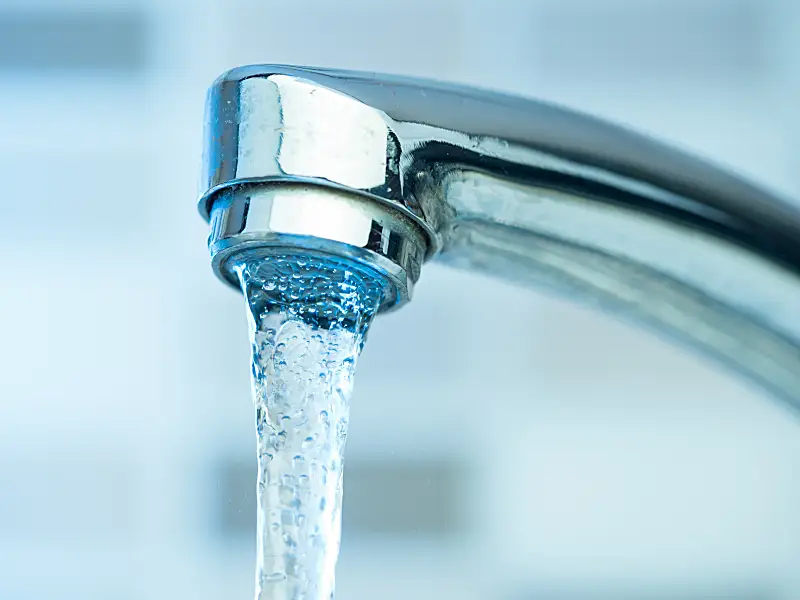
When we think of “dirty” water, we usually envision murky colors, floating sediment, or an unpleasant odor. We rely on our senses to tell us when something is wrong with the world around us. Unfortunately, when it comes to the safety of our drinking water, our senses are not just unreliable—they can be downright misleading.
Lead is a silent contaminant. It is entirely invisible, completely odorless, and lacks any discernible taste. It can be present in concentrations high enough to trigger health concerns while the water coming from your faucet appears perfectly crystal clear. This “silent” nature is exactly why testing your water is a non-negotiable aspect of responsible home maintenance, regardless of how your water looks or tastes.
The Illusion of Clarity
Many homeowners operate under the assumption that if their water looks clean, it must be safe. However, lead does not enter your water in the form of dirt or mud. It enters through the process of corrosion.
Lead-containing materials—such as lead service lines, lead-based solder used to join copper pipes, and older brass fixtures—leach lead ions into the water at a microscopic level. Because these lead ions are dissolved, they do not change the physical appearance of the water. You cannot see them, and you certainly cannot taste them. You could be drinking water that meets all your aesthetic expectations while still ingesting lead particles that have been accumulating in your pipes for hours.
Why “Looks Clean” Is Not a Metric for Safety
There is a profound difference between aesthetic water quality and health-based water quality. A municipal water utility might provide water that is treated for turbidity and color, but they cannot control the interior of the pipes on your private property.
The leaching process is highly dependent on local water chemistry. Factors such as the pH of your water, its mineral content, and the duration of time it sits stagnant in your pipes all dictate how much lead is released. This means that two identical glasses of water—one poured at 8:00 AM and one at 8:00 PM—could have drastically different lead concentrations. The morning glass, which has sat in your plumbing all night, is likely to have a higher lead concentration than the evening glass, yet both will look identical to the naked eye.
This is the central reason why people test water: to uncover the chemical reality that our eyes cannot perceive.
The Hidden Risks of Older Infrastructure
The risk of lead is disproportionately higher in homes built before the mid-1980s. If you live in an older property, the plumbing system might be a “time capsule” of materials that we now know to be hazardous.
Even if you have replaced some of your pipes, the infrastructure outside your home can still be a source of contamination. Many cities still have “local” service lines—the pipe running from the water main under the street to your house—that are made of lead. If you are interested in the history and risks associated with these older systems, learning about lead in older buildings is a great way to understand why older homes require a different level of vigilance than modern new construction.
The Science: Understanding the “First-Draw”
Because lead is invisible, we must use science to find it. The standard procedure for detecting lead is the “first-draw” sample. This method requires collecting the very first water that comes out of your tap after it has sat idle in your pipes for at least six hours.
This test is designed specifically to capture the “worst-case” levels of lead. By testing this stagnant water, we are essentially looking for the maximum concentration of lead that could have accumulated in your system. It is a precise, scientific approach that cuts through the illusion of “clean” water. Understanding how lead testing works helps demystify the process and underscores why you cannot rely on visual inspections.
When to Take Action
If your water looks clean but you have not tested it, you are essentially relying on guesswork. To move from guesswork to certainty, consider these steps:
- Schedule a Laboratory Test: Use an EPA-certified laboratory. They provide a specific numerical value in parts per billion (ppb), which tells you exactly what you are drinking.
- Check Your Local Data: Your local water utility is required to release an annual Water Quality Report. Check this to see if there are known lead issues in your district, which can help you gauge your own home’s risk level.
- Don’t Ignore the “invisible”: Just because you haven’t had issues in the past doesn’t mean your plumbing hasn’t aged. Corrosion is an ongoing process, and the chemical composition of municipal water can change due to seasonal shifts or changes in treatment chemicals.
Addressing Common Concerns
Many homeowners worry that testing will only lead to expensive plumbing repairs. However, in our FAQ section, you will find that many lead issues can be mitigated by simple actions, such as flushing your taps before use or installing a certified NSF/ANSI Standard 53 water filter.
Testing isn’t about creating panic; it is about gathering the necessary data to take control of your environment. Once you have the results, you have the power to decide which solutions—if any—are right for your household.
Final Thoughts
The fact that your water looks, tastes, and smells clean is a good sign that your utility is doing its job regarding basic treatment. However, it says nothing about the pipes that bring that water into your home.
By testing your water, you are acknowledging that safety is a proactive endeavor. You don’t wait for a sign of danger to check your smoke alarms, and you shouldn’t wait for “dirty” water to check for lead. Knowledge is the most effective tool you have. Whether you are a long-time homeowner or someone moving into a new property, browse our blog for more tips on maintaining a healthy, safe, and transparent home environment.
Disclaimer: This information is for educational purposes. For official health guidelines or if you are concerned about your exposure to lead, please contact your healthcare provider or your local health department. You can find more information on official safety thresholds on the Environmental Protection Agency (EPA) website.
Are you ready to stop relying on visual appearance and schedule your first laboratory test to confirm what’s really in your water?